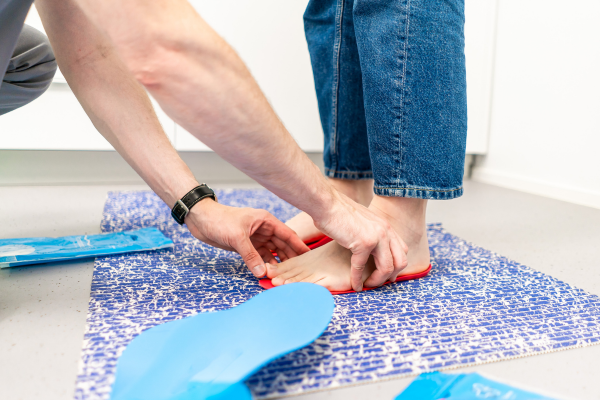
Podiatrist fitting a red and blue custom orthotic insole to a patient's foot at a clinical fitting appointment, demonstrating the precision fitting process included with every custom orthotic prescription at Foot & Ankle Centers of New Jersey

Custom Orthotics at Foot & Ankle Centers of New Jersey

Prescription Devices. Individual Fabrication. Every Condition Where Biomechanics Matter.

Custom orthotics are prescription medical devices individually fabricated from molds or digital scans of your feet, designed to modify the mechanical function of the foot and lower limb. They are not arch supports or pharmacy insoles. They are prescription devices, designed around your specific foot structure, gait mechanics, and diagnosis, and prescribed, fitted, and monitored by a board-certified podiatrist.

At Foot & Ankle Centers, custom orthotics are one of the most frequently prescribed interventions across all of our New Jersey locations. They are used to treat heel pain, plantar fasciitis, flat feet, diabetic foot complications, and a range of lower limb conditions where biomechanical factors are contributing to the patient’s symptoms. When the clinical evaluation identifies a structural or mechanical driver of your condition, a custom orthotic addresses that driver at the ground-contact level with every step you take.

For a complete patient education resource on what custom orthotics are, how they compare to OTC insoles, what the evidence says, and what they cost, see our complete custom orthotics patient guide. This page covers the service itself: who is a candidate, what the process looks like at Foot & Ankle Centers, and what outcomes patients can expect.

Custom orthotics are prescription medical devices individually fabricated from a digital scan or mold of your specific foot, designed around your individual biomechanics and diagnosis. Store-bought insoles are consumer products manufactured in generic sizes to fit a range of foot shapes. The clinical distinction is not a matter of degree, it is a matter of design intent, fabrication process, and what the device is actually doing to your foot mechanics with every step. For most diagnosed biomechanical conditions, a prescription custom orthotic and a pharmacy insole are not interchangeable.

Custom orthotics are most appropriate when a podiatric evaluation identifies a specific biomechanical finding contributing to your symptoms, and when footwear changes and over-the-counter insoles have not provided adequate relief. Common indicators include heel pain that is worst in the morning, foot pain that worsens with prolonged standing or walking, flat feet or high arches causing symptoms, or lower limb pain such as shin splints or knee pain linked to foot mechanics. A clinical evaluation is the only reliable way to determine whether a custom prescription is necessary.

Our Foot Doctors can help. Make an appointment for a custom orthotic evaluation at Foot & Ankle Centers today.

Who Needs Custom Orthotics?

Prescribed When the Clinical Evaluation Confirms a Biomechanical Indication – Not Before

Custom orthotics are most clinically indicated when a podiatric evaluation identifies a specific biomechanical finding that is contributing to or driving the patient’s symptoms, and when conservative measures such as footwear modification and over-the-counter insoles have not provided adequate relief.

The most common conditions for which our podiatrists prescribe custom orthotics are plantar fasciitis, heel pain, flat feet, high-arched feet, posterior tibial tendon dysfunction, bunions and hammertoes, diabetic foot complications, Achilles tendinopathy, metatarsalgia, and lower-limb overuse injuries, including shin splints and patellofemoral pain syndrome. Custom orthotics are also prescribed as a preventive measure for high-risk patients, particularly those with diabetes or peripheral neuropathy, to reduce pressure concentration on the plantar surface and minimize the risk of ulceration.

Custom orthotics are not appropriate for every foot complaint. Mild, early-stage conditions often respond to footwear change and a structured home program. Our podiatrists prescribe custom devices when the clinical evaluation confirms that a precision prescription is necessary, not as a routine recommendation for every patient.

At Foot & Ankle Centers:

  • Prescription devices individually fabricated from a digital scan of your foot, not generic off-the-shelf insoles
  • Medicare Part B and most private insurance plans cover custom orthotics for qualifying conditions
  • All fittings include a follow-up appointment to assess comfort, gait response, and make adjustments

Podiatrist examining a patient's bare feet standing on an illuminated digital scanning light box during the custom orthotic fabrication process at Foot & Ankle Centers of New Jersey

Plantar fasciitis and heel pain: The most common indication. Custom orthotics reduce tensile load on the plantar fascia at the heel bone insertion by controlling subtalar pronation, supporting the arch at its correct height and angle, and cushioning the heel during loading. They are most effective as part of a treatment plan that also includes a structured stretching program. See our plantar fasciitis treatment page for how orthotics fit into the full clinical pathway.

Flat feet (pes planus): Both flexible and rigid flat feet are managed with custom orthotics, though the devices differ. Flexible flat feet require functional control and medial arch support that engages during loading. Rigid flat feet require an accommodative design that distributes pressure across the fixed foot structure rather than attempting to alter it. Orthotics do not structurally correct flat feet, but significantly reduce the symptomatic consequences during daily activity.

High arch (pes cavus): High-arched feet are rigid, supinate during gait, and have reduced shock absorption. Custom orthotics for pes cavus provide lateral posting, deep heel cupping, and forefoot cushioning to redistribute load and reduce the risk of stress fractures and ankle instability.

Posterior tibial tendon dysfunction (PTTD): Custom orthotics with medial rearfoot posting and arch support are first-line conservative treatment for early PTTD, supporting the collapsed medial arch and reducing the demand on the posterior tibial tendon during gait.

Diabetic foot care: Total contact insoles are a cornerstone of diabetic foot management. They distribute pressure evenly across the entire plantar surface, eliminating the focal high-pressure points that progress to calluses and ulceration. Medicare specifically covers this indication. Patients with diabetes, peripheral neuropathy, or peripheral vascular disease are advised not to delay orthotic evaluation regardless of symptom severity.

Bunions and hammertoes: Orthotics reduce the progressive mechanical forces that drive bunion and hammertoe deformity and provide symptomatic relief by offloading the affected joint. They do not correct the structural deformity, but slow progression and reduce daily pain in patients who are not yet surgical candidates.

Achilles tendinopathy: Heel lifts and rearfoot orthotic support reduce tension on the Achilles tendon at its insertion and during the push-off phase of gait, supporting the loading rehabilitation program for both insertional and mid-portion presentations.

Lower limb overuse injuries: Shin splints, patellofemoral pain, and iliotibial band syndrome associated with overpronation or other foot biomechanical abnormalities respond to custom orthotics that address the ground-level mechanical driver and reduce compensatory loading throughout the kinetic chain.

Pediatric conditions: Symptomatic intoeing, outtoeing, and pediatric flat feet that have not self-corrected with age may benefit from custom orthotics when the presentation affects gait development or causes pain.

The custom orthotic process at Foot & Ankle Centers involves more than measuring the foot. Every prescription begins with a complete biomechanical evaluation.

Step 1 — Biomechanical Assessment: Your podiatrist evaluates your foot structure at rest and under load, assessing arch height, heel alignment, ankle range of motion, and forefoot position. Restricted ankle dorsiflexion, excessive subtalar pronation, and forefoot varus are examples of findings that directly influence orthotic design. Two patients with the same diagnosis may receive different orthotics because their feet and biomechanical profiles are different.

Step 2 — Gait Analysis: You will be observed walking, and in some cases running, to assess how your foot functions dynamically. Static foot position in a chair is less clinically relevant than how your foot behaves during the loading and push-off phases of gait. Gait analysis is where the most important prescription decisions are made.

Step 3 — Digital Scan or Mold: A digital scan or physical cast captures the three-dimensional contour of your foot. Foot & Ankle Centers uses digital scanning technology in most cases, which provides accurate, reproducible data for the fabrication laboratory with no plaster and no wait time for cast setting.

Step 4 — Prescription Writing: Your podiatrist writes a detailed prescription specifying the orthotic type (functional or accommodative), material, shell thickness, arch height, rearfoot post angle, and any required additions, metatarsal pads, heel lifts, or cutouts for sensitive areas. This prescription document is sent to the fabrication laboratory with your scan.

Step 5 — Fabrication: Your orthotics are fabricated at a medical laboratory from your prescription and scan. Fabrication takes approximately 2 to 4 weeks, depending on device complexity.

Step 6 — Fitting and Follow-Up: When your orthotics arrive, you return for a fitting appointment. Your podiatrist checks the fit in your footwear, assesses your gait response, and makes any immediate adjustments. A follow-up appointment at 4 to 6 weeks is standard to assess your response and make any refinements. Most patients require at least one minor adjustment after the initial break-in period, which is a normal and expected part of the process.

Initial discomfort in the first 1 to 2 weeks of wearing custom orthotics is common and does not indicate the device is wrong. Your foot has been loading in a habitual pattern, potentially for years, and the orthotic changes that pattern. Muscles, tendons, and ligaments that have adapted to the previous loading pattern need time to adjust to the corrected one.

The standard break-in protocol is to wear orthotics for 1 to 2 hours on day one, increasing by 1 to 2 hours each subsequent day over the following 2 weeks. This gradual progression prevents overloading structures that are not yet conditioned for the new mechanics.

Expected symptoms: Symptoms you can expect during break-in: mild arch fatigue, slight calf tightness, and a sense that the device feels prominent under the arch. These typically resolve within 2 weeks.

Contact your podiatrist if: Sharp pain in a new location, worsening of your original symptoms beyond the first week, pain that is not reducing after 2 weeks of consistent wear, or skin irritation or blistering from the device.

Cost: Custom orthotics prescribed and fabricated through Foot & Ankle Centers typically range from $200 to $800, depending on device complexity and materials. This covers the clinical evaluation, scan, fabrication, and fitting appointment.

Private insurance: Most private employer-sponsored insurance plans include coverage for custom orthotics when prescribed for a medically necessary indication. A recent survey found that approximately 75 percent of employer plans cover customized bracing. Prior authorization may be required. Contact your insurer before your appointment to confirm your specific coverage, co-pay, and deductible requirements.

Medicare Part B: Medicare covers custom orthotics as durable medical equipment for qualifying patients with diabetes or severe foot disease. Medicare typically covers 80 percent of the approved cost after the Part B deductible is met. Medicare Advantage plans vary — verify coverage directly with your plan. For a detailed breakdown of Medicare coverage criteria, see our guide to Medicare coverage for custom orthotics.

Insurance coverage varies by plan, diagnosis code, and medical necessity determination. Contact your insurance provider and our billing department to verify your specific coverage and benefits before your appointment.

Two people walking comfortably on a stone path in athletic footwear, illustrating the improved mobility and pain-free daily activity outcomes achieved with custom orthotic treatment at Foot & Ankle Centers of New Jersey

What Patients Can Expect from Custom Orthotics at Foot & Ankle Centers

Clinical Outcomes That Over-the-Counter Insoles Cannot Replicate

Custom orthotics prescribed following a thorough biomechanical evaluation produce outcomes that over-the-counter insoles cannot replicate because they are designed around your individual foot mechanics rather than a generic foot shape. At Foot & Ankle Centers, the orthotic prescription results from a complete clinical evaluation, not a form completed in a pharmacy aisle.

Patients treated with custom orthotics at Foot & Ankle Centers consistently report meaningful reductions in foot and heel pain, improved ability to stand and walk for extended periods, and reduced frequency of recurrences when the underlying biomechanical cause is addressed. For patients with diabetic foot complications, orthotics are a critical protective intervention that reduces the risk of ulceration and the serious systemic consequences it can produce.

  • Prescriptions based on complete biomechanical evaluation, gait analysis, and digital foot scanning
  • Fabricated by medical laboratories using clinical-grade materials
  • Fitting appointment included with every prescription, plus follow-up to assess response
  • Adjustments included at the follow-up appointment at no additional cost
  • Available for pediatric patients, athletes, diabetic patients, and all activity levels
  • All prescriptions and fittings available at our Hamilton, Ewing, East Windsor, Flemington, and Somerset locations

What to Expect at Your Custom Orthotic Evaluation

A Complete Biomechanical Evaluation Before Any Device Is Prescribed

Your custom orthotic appointment at Foot & Ankle Centers is not a measurement session; it is a clinical evaluation. Before any prescription is written, your podiatrist will perform a complete assessment of your foot structure at rest and under load, evaluate your ankle range of motion, assess your arch height and heel alignment, and observe your gait. These findings, not your symptom report alone, determine whether custom orthotics are clinically indicated and exactly what the prescription should specify.

Digital scanning technology is typically used to capture the three-dimensional contour of your foot. Unlike traditional plaster casting, digital scanning is immediate, produces highly accurate, reproducible data for the fabrication laboratory, and requires no wait time for a mold to set. Your podiatrist writes a detailed prescription specifying orthotic type, material, shell thickness, arch height, rearfoot post angle, and any required additions before the scan data is sent to the fabrication lab. Fabrication typically takes 2 to 4 weeks.

When your orthotics arrive, you return for a fitting appointment. Your podiatrist checks the fit in your footwear, assesses your gait response, and makes any adjustments needed. A follow-up appointment at 4 to 6 weeks is standard. Most patients require at least one minor adjustment after the initial break-in period; this is a normal and expected part of the process, not a sign that the prescription was wrong.

  • Bring the shoes you wear most often; footwear assessment is part of the biomechanical workup
  • Tell your podiatrist about all activities you engage in regularly, athletic, occupational, and recreational demands all influence orthotic design
  • If you have had orthotics before, bring them to the appointment so your podiatrist can assess their condition and design
  • Verify your insurance coverage before your appointment, contact your insurer to confirm custom orthotic benefits under your specific plan
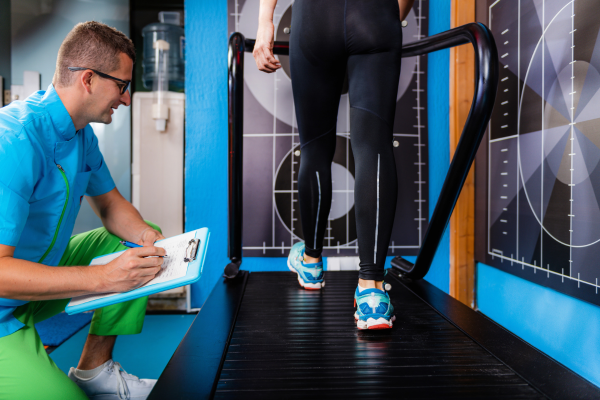
Podiatrist crouching beside a treadmill taking notes on a clipboard while observing a patient's gait during a biomechanical assessment for custom orthotic prescription at Foot & Ankle Centers of New Jersey

At Foot & Ankle Centers, our board-certified podiatrists prescribe, fabricate, and fit custom orthotics for a full range of foot and ankle conditions at all of our New Jersey locations. Please schedule an appointment for a complete biomechanical evaluation and custom orthotic consultation.

Frequently Asked Questions

Answers to some of the most common questions about heel pain treatment and our Foot & Ankle Centers locations across New Jersey.

For mild foot fatigue without a specific diagnosis, an over-the-counter insole may provide adequate relief. For diagnosed biomechanical conditions – plantar fasciitis, flat feet, PTTD, diabetic foot complications – custom orthotics are clinically superior because the prescription addresses your individual foot mechanics rather than a generic foot shape. The clinical advantage is most pronounced in moderate to severe cases and for conditions where the precision of the prescription matters over time. Our podiatrists recommend custom orthotics only when a clinical evaluation confirms that a generic device will not adequately address the patient’s needs.

It depends on the condition. Some conditions, including flat feet and certain structural abnormalities, are permanent, meaning orthotics will likely be needed indefinitely to manage their symptoms. Other conditions, such as early plantar fasciitis, post-surgical recovery, and certain overuse injuries, may resolve sufficiently that orthotics are no longer required. Your podiatrist will advise at your follow-up appointments on whether continued use is necessary and will reassess periodically as your condition evolves.

Custom orthotics require shoes with a removable insole and adequate depth to accommodate the device. Most athletic and casual lace-up shoes are compatible. Flat shoes with no depth, most high heels, and minimalist footwear are not. Your podiatrist will advise on appropriate footwear at the fitting appointment.

Wipe orthotics with a damp cloth and mild soap as needed. Do not soak them or expose them to heat; heat can warp the shell material. Allow them to air dry fully before wearing. Replace the top cover when it shows significant wear. Bring orthotics to every podiatry appointment so your podiatrist can assess their condition alongside your foot.

Yes. Custom orthotics are safe and effective for children with symptomatic flat feet, intoeing, outtoeing, or pediatric gait abnormalities that are affecting comfort or development. Pediatric orthotics may need to be updated more frequently than adult devices as the foot grows. Your podiatrist will recommend a review schedule appropriate to your child’s age and rate of growth.

Custom orthotic evaluation and fitting is available at all Foot & Ankle Centers locations in New Jersey, including Hamilton, Ewing, East Windsor, Flemington, and Somerset. Find a location near you or book an appointment online.

Our Testimonials

I have always had good experiences. All the doctors and staff are amazing. I wish my other doctor appointments were as easy. The staff is always so friendly, helpful, I look forward to my visits.

Francine Coleman

Foot and Ankle center is a great place for Podiatry. My doctor, Dr. Niti Patel, is very pleasant and professional to work with. The place is kept clean and tidy. I have been visiting this place just more than a year since my podiatrist retired. The assistants were easy to deal with to set up appointments and follow up on presentations/refills. I would strongly recommend this place without hesitation.

Ganapathy Muthukumar

I have been going to this practice for several years and have found the staff to be courteous and efficient. Dr. Mak. has a wonderful demeanor and makes each visit a pleasant experience. I would and have recommended him to friends. The last time I went I saw Dr. Levy and I was very pleased with my visit. He was efficient, very pleasant and asked the appropriate questions. Kudos to the front staff as well.

Carmen Brown