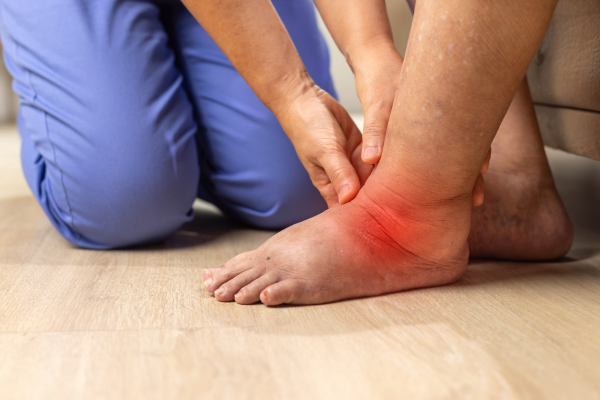
Close-up of a patient's swollen and inflamed ankle with a red highlighted area indicating acute gout flare pain, being assessed by a podiatrist at Foot & Ankle Centers of New Jersey

Gout Treatment at Foot & Ankle Centers of New Jersey

Acute Flare Relief. Long-Term Prevention. Every Stage of Gout Care.

Gout is a form of inflammatory arthritis caused by the deposition of monosodium urate crystals in and around joints. It produces sudden, severe joint pain, swelling, warmth, and redness that typically peak within 24 to 48 hours and can be debilitating at their worst. While gout is a systemic metabolic condition managed with input from primary care and rheumatology, its most common and painful manifestations occur in the foot and ankle, where a podiatrist’s clinical role becomes central.

At Foot & Ankle Centers, we treat gout at every stage: confirming the diagnosis through joint aspiration and imaging when required, managing acute flares with in-office injection therapy and medication guidance, coordinating long-term uric acid management, and addressing the structural and mechanical consequences of chronic gout in the foot. We also treat the patients most at risk of complications, those with diabetes, chronic kidney disease, and cardiovascular conditions, with the monitoring and joint protection protocols those presentations require.

For a complete patient education resource on what gout is, how it is triggered, which foods to avoid, and how the condition progresses, see our complete gout guide. This page specifically covers the clinical treatment pathway at Foot & Ankle Centers.

A gout attack typically begins with sudden, severe pain in a single joint, most commonly the big toe, but the ankle, midfoot, and heel are also frequent sites. The joint becomes intensely swollen, warm, and red, sometimes to the point that the skin is shiny and cannot tolerate the touch of a bedsheet. Symptoms often begin at night and reach peak intensity within 24 to 48 hours. The severity is what distinguishes gout from most other causes of joint pain; patients consistently describe it as one of the most painful experiences they have had.

Both specialists have a role. Your primary care physician or rheumatologist manages your systemic uric acid levels and related metabolic conditions. A podiatrist manages local joint complications in the foot and ankle, confirming the diagnosis through joint aspiration, treating acute flares with in-office injection therapy, protecting damaged joints with orthotics, and performing surgery for chronic complications. If your pain is primarily in the foot or ankle, a podiatrist is the appropriate first point of contact and can coordinate with your other providers for systemic management.

Our Foot Doctors can help. Make an appointment for a comprehensive gout evaluation at Foot & Ankle Centers today.

How Foot & Ankle Centers Treats Gout

From Acute Flare to Chronic Disease – A Complete Podiatric Management Pathway

Gout management at a podiatry practice differs from that of a primary care physician or rheumatologist in one important way: a podiatrist focuses specifically on the foot and ankle joint level. While your internist or rheumatologist manages systemic uric acid levels and underlying metabolic risk factors, your podiatrist manages the local joint consequences, confirming the diagnosis through joint-level evaluation, treating the acute flare with targeted injection therapy, protecting the joint from structural damage during remission, and intervening surgically when tophi or joint destruction require it.

For patients with straightforward gout who have not yet established care with a rheumatologist, Foot & Ankle Centers provides comprehensive initial management, including diagnostic workup and medication guidance, and coordinates referral to rheumatology when the systemic picture warrants it. Many patients with foot and ankle gout are best served by both specialists working in parallel.

The treatment approach is organized into two distinct phases of gout: the acute flare, which requires rapid anti-inflammatory intervention, and the intercritical and chronic phases, which require uric acid management and joint protection to prevent recurrence and long-term damage.

Podiatrist in blue scrubs seated on the floor performing a hands-on examination of a patient's swollen ankle joint, assessing gout inflammation and range of motion at Foot & Ankle Centers of New Jersey

A clinical diagnosis of gout is made on the basis of history, physical examination, and laboratory findings, but the definitive diagnostic standard is arthrocentesis (joint aspiration) with polarized light microscopy for identification of monosodium urate crystals in the synovial fluid. This is the test that distinguishes gout from septic arthritis, pseudogout (calcium pyrophosphate deposition disease), and reactive arthritis, all of which can present with identical clinical pictures of sudden, hot, swollen joints.

At Foot & Ankle Centers, joint aspiration of the affected foot or ankle joint is available in-office. The procedure involves inserting a small needle into the joint under sterile conditions to withdraw synovial fluid for analysis. In acute presentations, aspiration serves a dual purpose: it provides definitive diagnostic confirmation and significantly reduces intra-articular pressure, thereby relieving pain. It is performed under local anesthetic and takes approximately 10 to 15 minutes.

Additional diagnostic tools used at Foot & Ankle Centers include:

  • Serum uric acid: A blood test measuring uric acid levels. Note that serum uric acid is often normal or low during an acute gout flare due to redistribution, so a normal result does not rule out gout. The test is most useful for establishing the baseline and monitoring response to uric acid-lowering therapy over time.
  • X-ray: Weight-bearing X-rays identify erosive joint changes, tophi calcification, and bony destruction in patients with chronic or recurrent gout. Acute gout does not produce X-ray changes, but imaging is valuable in chronic presentations.
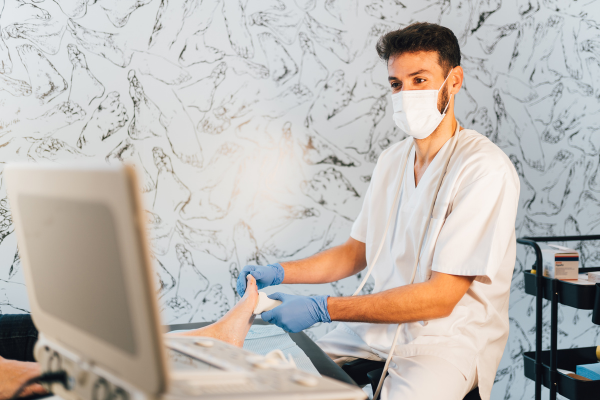
  • Diagnostic ultrasound: Ultrasound is highly sensitive for detecting monosodium urate crystal deposition, including the characteristic double contour sign on cartilage surfaces and tophaceous deposits within and around joints. It is the preferred imaging modality for confirming gout in the foot and ankle without radiation exposure and can be performed at the same appointment.

The priority during an acute gout flare is rapid, aggressive anti-inflammatory treatment. The earlier treatment is initiated after the onset of a flare, the faster and more complete the response. Patients who present within the first 24 hours of a flare consistently achieve faster resolution than those who wait several days before seeking care.

  • NSAIDs (Non-Steroidal Anti-Inflammatory Drugs): Indomethacin and naproxen are the NSAIDs with the strongest evidence base for acute gout flare management. They are most effective when initiated at full therapeutic doses at the first sign of a flare and continued for 5 to 7 days. NSAIDs are the first-line oral option for patients without contraindications, specifically those without significant renal impairment, gastrointestinal ulcer history, or cardiovascular disease that limits NSAID use. Your podiatrist will assess your medical history before recommending NSAIDs.
  • Colchicine: Colchicine is the other first-line option for acute gout flares and is particularly appropriate for patients in whom NSAIDs are contraindicated. It works by disrupting microtubule formation in neutrophils, preventing the inflammatory cascade triggered by urate crystal phagocytosis. The evidence supports a low-dose protocol, 1.2mg at onset followed by 0.6mg one hour later, as equally effective to higher-dose regimens with significantly fewer gastrointestinal side effects. Colchicine is most effective when initiated early; it is substantially less effective when started more than 36 to 48 hours after flare onset. Your podiatrist can prescribe colchicine and provide guidance on the low-dose protocol.
  • Corticosteroid Injection (In-Office): For patients who cannot tolerate NSAIDs or colchicine, or whose acute flare has not responded adequately to oral medication, intra-articular corticosteroid injection is the most effective and rapidly acting option available. Injection delivers a concentrated anti-inflammatory dose directly into the affected joint, bypassing the gastrointestinal and systemic risks of oral steroids. At Foot & Ankle Centers, joint injection for acute gout is performed under ultrasound guidance to ensure accurate intra-articular placement. Patients typically experience significant pain reduction within 24 to 48 hours of injection. In patients with comorbidities that limit oral anti-inflammatory options, including chronic kidney disease, diabetes, and heart failure, joint injection is often the preferred first-line intervention rather than a fallback.
  • Oral Corticosteroids: When joint injection is not immediately available or the flare involves multiple joints, a short course of oral prednisone is an appropriate alternative. A typical regimen is 30 to 40mg daily for 3 to 5 days, tapered over the following week. Oral corticosteroids carry a risk of rebound flare on tapering and are not preferred for patients with poorly controlled diabetes due to their effect on blood glucose.
  • Supportive Measures: Regardless of medication choice, supportive care during an acute flare includes complete rest of the affected joint, elevation, and ice application (20 minutes on, 20 minutes off) to reduce local swelling. Protective footwear or a post-operative shoe may be recommended to offload the joint and allow ambulation with minimal pain during the acute phase. Adequate hydration is encouraged to support renal clearance of uric acid.

After the acute flare resolves, the focus shifts to preventing recurrence and protecting the joint from the cumulative damage of repeated episodes. Untreated gout with recurrent flares leads to progressive joint erosion, tophi deposition, and, in severe cases, irreversible joint destruction. Each additional flare adds to this burden.

  • Uric Acid-Lowering Therapy (ULT): Uric acid-lowering therapy is indicated for patients with two or more gout flares per year, tophi, uric acid nephrolithiasis, or gout with underlying chronic kidney disease. The goal is to reduce serum uric acid to below 6 mg/dL, the saturation threshold below which existing crystals dissolve and new crystal formation ceases. Allopurinol is the first-line ULT agent. It is a xanthine oxidase inhibitor that reduces uric acid synthesis. Dosing begins low (100mg daily) and is titrated upward to achieve the target uric acid level, with a maximum of 800mg daily. It is renally cleared and requires dose adjustment in patients with chronic kidney disease. Febuxostat is an alternative xanthine oxidase inhibitor used when allopurinol is contraindicated or not tolerated and carries an FDA warning regarding cardiovascular risk that should be discussed before initiation. ULT is typically initiated by a primary care physician or rheumatologist. Foot & Ankle Centers coordinates this aspect of management with the patient’s broader medical team and monitors foot and ankle outcomes as ULT takes effect. Patients should be aware that initiating ULT can paradoxically precipitate acute flares in the first 3 to 6 months, as crystal dissolution triggers an inflammatory response. Prophylactic low-dose colchicine during the first 3 to 6 months of ULT is standard practice to reduce this risk.
  • Dietary and Lifestyle Modification: Dietary modification alone is rarely sufficient to normalize uric acid levels but plays a meaningful supporting role. High-purine foods – red meat, organ meats, shellfish – and alcohol, particularly beer and spirits, raise serum uric acid and are well-established flare triggers. Adequate hydration (at least 2 liters of water daily), weight management, and reducing fructose-sweetened beverages are evidence-based recommendations for all patients with gout. For a full dietary guide, including foods to eat and avoid, see our gout in ankle and foot guide.
  • Joint Protection with Custom Orthotics: Patients with recurrent gout in the first metatarsophalangeal joint (big toe), midfoot, or ankle benefit from custom orthotics that redistribute pressure away from the affected joint during ambulation. This reduces the mechanical stress at the crystal deposition site between flares, decreases the likelihood of microtrauma triggering crystal shedding, and protects the joint surface from compressive loading that accelerates cartilage loss in already damaged gouty joints. Orthotics are a standard component of the intercritical management plan at Foot & Ankle Centers for patients with moderate-to-severe joint involvement.

Chronic tophaceous gout develops in patients with long-standing elevated uric acid in whom urate crystals have accumulated as solid deposits called tophi in the soft tissues surrounding joints, in the skin, and within joint structures. Tophi in the foot and ankle produce mechanical problems distinct from acute gout: pressure necrosis of overlying skin, joint stiffness and restricted range of motion, nerve compression, and, in advanced cases, pathological fracture of bone eroded by tophaceous deposits.

  • Wound Care for Draining Tophi: Tophi that have eroded through the skin produce open wounds that require active wound management to prevent secondary bacterial infection. At Foot & Ankle Centers, wound assessment and dressing of draining tophaceous wounds are provided alongside systemic uric acid management. These wounds typically close once uric acid levels are adequately reduced through ULT, but active wound care prevents infection during the resolution period.
  • Surgical Debulking of Tophi: Surgical removal of tophi is indicated when the deposit is causing mechanical obstruction of joint movement, significant skin breakdown that is not healing with conservative care, or nerve or tendon compression. The procedure involves debulking the tophaceous material and reconstructing the overlying soft tissue. It does not address the underlying metabolic condition and must be combined with medical ULT to prevent reaccumulation.
  • Joint Reconstruction: Advanced chronic gout with significant joint destruction, particularly of the first metatarsophalangeal joint or ankle, may require reconstructive surgery to restore function and relieve pain. Depending on the degree of destruction and the patient’s activity requirements, options include joint debridement, arthrodesis (joint fusion), or, in selected cases, joint replacement. These procedures are performed by the board-certified podiatric surgeons at Foot & Ankle Centers after a full evaluation of joint imaging, functional status, and medical optimization of uric acid levels. Not all patients with chronic tophaceous gout require surgery. Evaluation by a board-certified podiatric surgeon is required to determine whether surgical intervention is appropriate for your individual presentation.
Podiatrist in blue gloves and face mask performing an ultrasound-guided examination of a patient's foot with imaging equipment, used for gout diagnosis and intra-articular injection guidance at Foot & Ankle Centers of New Jersey

Why Podiatric Care Is Central to Gout Management

The Foot and Ankle Specialist Your Gout Management Plan Is Missing

Gout is the most common inflammatory arthritis in adults in the United States, affecting approximately 9.2 million Americans, and the foot and ankle are its primary targets. The first metatarsophalangeal joint – the big toe joint – is involved in approximately 70 percent of first gout attacks. Yet gout in the foot is frequently managed entirely at the primary care level, with the structural and mechanical consequences of recurrent joint damage going unaddressed.

A podiatrist adds specific clinical value that primary care and rheumatology cannot fully provide: precise joint-level evaluation using ultrasound and aspiration; in-office injection therapy for the affected foot and ankle joints; biomechanical assessment and orthotic prescription to protect damaged joints; and surgical capability for complications of chronic tophaceous disease. For patients whose gout is recurring, causing joint damage, or affecting their ability to walk and wear shoes, podiatric care is not supplemental; it is central to controlling the condition.

  • In-office joint aspiration for definitive diagnosis and acute pressure relief in a single appointment
  • Ultrasound-guided intra-articular injection for acute flares with accuracy and reduced complication risk
  • Custom orthotics for joint protection and load redistribution in the intercritical phase
  • Surgical capability for tophi debulking, joint debridement, and reconstruction for chronic disease
  • Coordination with primary care and rheumatology for systemic uric acid management
  • All treatments are available at our Hamilton, Ewing, East Windsor, Flemington, and Somerset locations

What to Expect at Your Gout Appointment

A Confirmed Diagnosis and a Treatment Plan – All at Your First Visit

Your first appointment begins with a thorough history of your symptoms, including when the pain started, how quickly it reached peak intensity, which joint is affected, whether you have had previous episodes, and what medications you have taken. This history, combined with the clinical picture of the joint, is often highly suggestive of gout before any testing is performed. Your podiatrist will also review your current medications, medical history, and relevant metabolic conditions, including kidney disease, diabetes, and cardiovascular disease, all of which influence treatment decisions.

If joint aspiration is indicated and is the definitive standard for confirming gout, it can be performed at the same appointment. Joint aspiration at Foot & Ankle Centers takes approximately 10 to 15 minutes under local anesthetic. The synovial fluid is sent for laboratory analysis to confirm monosodium urate crystal deposition. Imaging, including X-ray and diagnostic ultrasound, can also be ordered, performed, or initiated at the same visit for most patients.

Before you leave, you will have a working or confirmed diagnosis, a treatment plan for the acute flare if one is active, and clear guidance on next steps, whether that is starting or adjusting medication, returning for a follow-up injection, beginning a dietary modification program, or coordinating referral to rheumatology for systemic uric acid management. You will not leave without a plan.

  • Tell your podiatrist about all medications you are currently taking – several common medications raise uric acid levels and are relevant to diagnosis and management
  • Note the timing of your current flare – when it started, how quickly it peaked, and what you have taken for it so far
  • Bring any prior lab results, including serum uric acid levels, if you have them
  • Same-day appointments are available at most Foot & Ankle Centers locations for patients in acute pain

Podiatrist in white coat with stethoscope writing notes on a patient treatment plan clipboard during a gout evaluation appointment at Foot & Ankle Centers of New Jersey

At Foot & Ankle Centers, our podiatrists provide comprehensive diagnosis and treatment for gout at every stage, from acute flare management and in-office joint aspiration through to surgical intervention for chronic tophaceous disease. Please schedule an appointment with our foot doctor for a complete gout evaluation.

Frequently Asked Questions

Answers to some of the most common questions about gout treatment and our Foot & Ankle Centers locations across New Jersey.

Gout typically presents as sudden, severe joint pain with marked swelling, warmth, and redness that peaks within 24 to 48 hours of onset. It most commonly affects the big toe joint, but the ankle, midfoot, and heel are also frequent sites. Symptoms often begin at night. What distinguishes gout from other causes of acute joint pain is the intensity and the rapid escalation from no symptoms to severe pain. Definitive diagnosis requires synovial fluid analysis from joint aspiration; a clinical diagnosis alone cannot reliably distinguish gout from other forms of inflammatory arthritis. If you have a hot, swollen foot or ankle joint, a same-day or next-day podiatric evaluation is warranted.

Both specialists have a role in gout management. A rheumatologist manages the systemic aspects of gout, serum uric acid levels, uric acid-lowering therapy, and related metabolic conditions. A podiatrist manages local joint conditions of the foot and ankle, including diagnosis via aspiration and imaging, acute flare treatment with injection therapy, joint protection with orthotics, and surgical intervention for complications. For patients whose primary symptoms are in the foot and ankle, a podiatrist is often the appropriate first point of contact and can coordinate with rheumatology for systemic management. See our gout in ankle symptoms and causes post for our perspective on foot and ankle-specific gout presentation.

Yes. Recurrent gout flares with inadequately controlled uric acid levels lead to progressive joint erosion, cartilage loss, and tophaceous deposits, causing structural damage over time. The risk is highest in patients with multiple flares per year and persistently elevated uric acid. This is why treating the acute flare is only part of the management plan; long-term uric acid control to below 6 mg/dL is essential to stop the underlying disease process.

Walking during an acute gout flare is painful and should be minimized for the first 24 to 72 hours while anti-inflammatory treatment takes effect. Complete rest of the affected joint, elevation, and ice application are recommended alongside medication. Once inflammation begins to subside, protected weight-bearing in a wide, supportive shoe or a post-operative shoe that offloads the affected joint is appropriate. Your podiatrist will advise on safe activity levels based on the affected joint and the severity of the flare.

Diagnostic evaluation, including joint aspiration and imaging, medication prescription, and in-office procedures for gout, are typically covered by private insurance and Medicare Part B as medically necessary care. Coverage details, including co-pay, prior authorization, and deductible requirements, vary by plan. Contact your insurer before your appointment to confirm your specific benefits, and contact our billing team if you have questions about coverage for specific procedures.

Gout treatment is available at all Foot & Ankle Centers locations in New Jersey, including Hamilton, Ewing, East Windsor, Flemington, and Somerset. Find a location near you or book an appointment online.

Our Testimonials

I have Dr. Niti Patel and I couldn’t have a sweeter doctor. She is so patient and caring and she never rushes you out. I would recommend her and their practice to anyone looking for a good podiatrist.

Kim Bellick

Great experience! Everyone was friendly, it was so easy to make an appointment, very small wait time to be seen by the doctor (I visited the Flemington location). Dr Patel was amazing! She took the time to explain everything and answer all my questions. She was very careful and mindful to make sure there was no pain in the process and gave me follow up steps to take. I would highly recommend this practice.

Dezire A

Very Professional Staffing personnel, The doctor was very knowledgeable, caring and friendly. Took the time to explained in details the problem that I was having with my right foot. The entire staffing unit was awesome. Highly recommended to any one. Five Star 🌟 ratings all the way . Job well done 👏. 👏

Daniel Rivera